- Icing is called when a team shoots the puck from its own half of the rink past the other team's goal line and no one touches it.
- Play stops, and the faceoff comes all the way back to the end of the team that iced it.
- That team cannot change its players or call a timeout before the faceoff.
- A team playing short-handed is allowed to ice the puck.
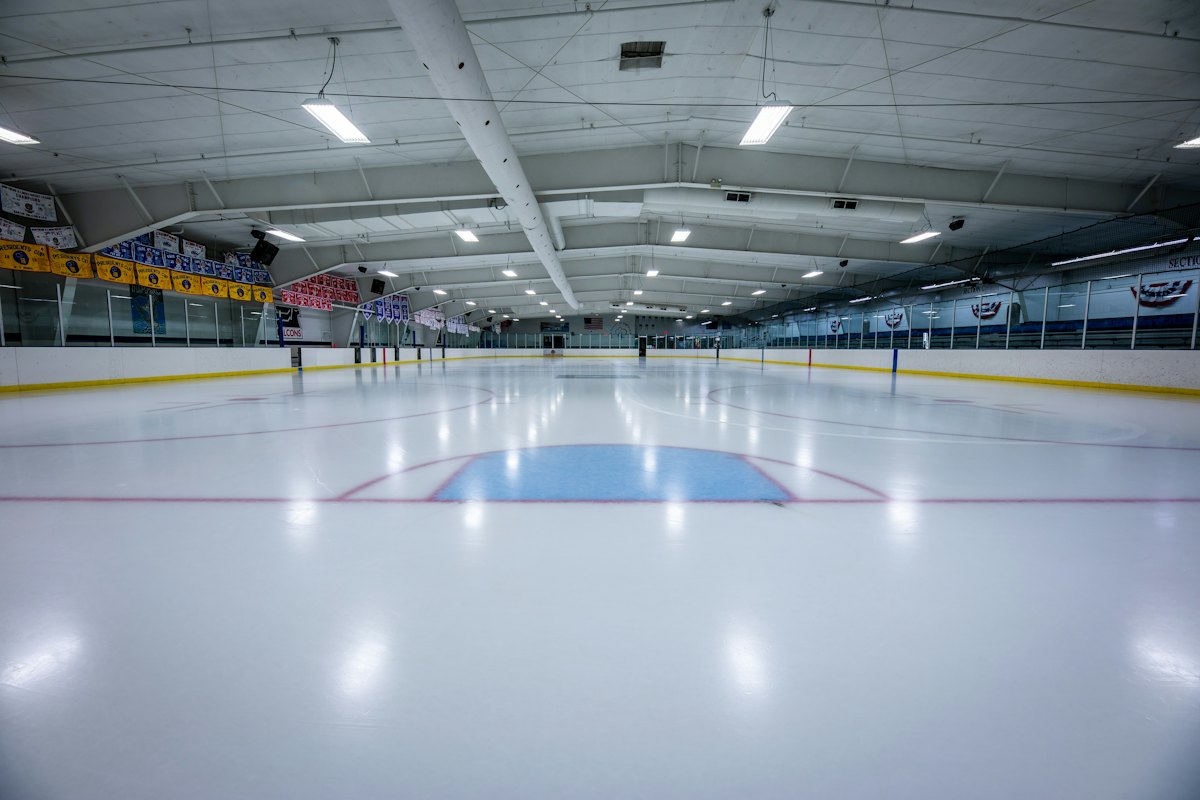
The whistle blows, nobody looks hurt, and every player skates back to the other end of the rink. If you are new to hockey, that is probably icing.
It is one of the most common stoppages in the game, and the idea behind it is simple. A team is not allowed to get out of trouble by firing the puck the length of the ice.
The basic rule
A red line crosses the middle of the rink. If a player shoots the puck from his own side of that line, and it slides untouched across the goal line at the far end, the linesman calls icing.
The goal line is the thin red line the net sits on. If the puck goes into the net instead of past it, that is not icing. That is a goal.
What it costs
Nobody goes to the penalty box. The punishment is about position and tired legs.
- The faceoff moves back to the defensive zone of the team that iced the puck.
- That team must keep the same players on the ice. The rule dates from the 2005-06 season.
- It cannot call a timeout to rest them either. That was added in 2017-18.
The other team can send out fresh players. So a tired group that iced the puck to get a breather ends up defending in its own end against rested opponents.
Icing does not send anyone to the box. It leaves tired players stuck on the ice.
When icing is waved off
The linesman lets play continue in several cases.
- The team that shot the puck is short-handed because of a penalty.
- The goalie leaves the crease to play the puck.
- A player on the other team could have played the puck before it crossed the goal line but chose not to.
- A player from the team that shot it would reach the puck first.
The race to the faceoff dots
That last case is the part fans argue about. For decades the NHL used touch icing. A defender had to skate back and touch the puck before the whistle blew, with an opponent chasing him at full speed toward the end boards. Players were badly hurt in those races.
Since the 2013-14 season the NHL has used hybrid icing. The linesman judges the race early, at the faceoff dots in the far zone. If the defender is ahead there, play stops at once. If the attacker is ahead, play goes on.
Why the rule exists
The NHL adopted icing in 1937. Before that, a team protecting a lead could simply shoot the puck down the ice again and again to waste time.
The rule made teams carry or pass the puck out of their own end instead. Almost 90 years later, it still shapes how every shift is played.
The other whistle you will hear all night is for offside. Here is offside in hockey, explained simply. And when a game is still tied after 60 minutes, this is how overtime and shootouts work.