- On February 22, 2020, both Carolina Hurricanes goalies were hurt during a game in Toronto.
- Their replacement was David Ayres, 42, who worked at the arena of Toronto's minor-league team and sometimes drove the Zamboni.
- He gave up goals on the first two shots he faced, then stopped the next eight. Carolina won 6-3.
- He is the first emergency backup goalie credited with an NHL win. Starting in 2026-27, the rule that put him in the net works differently.
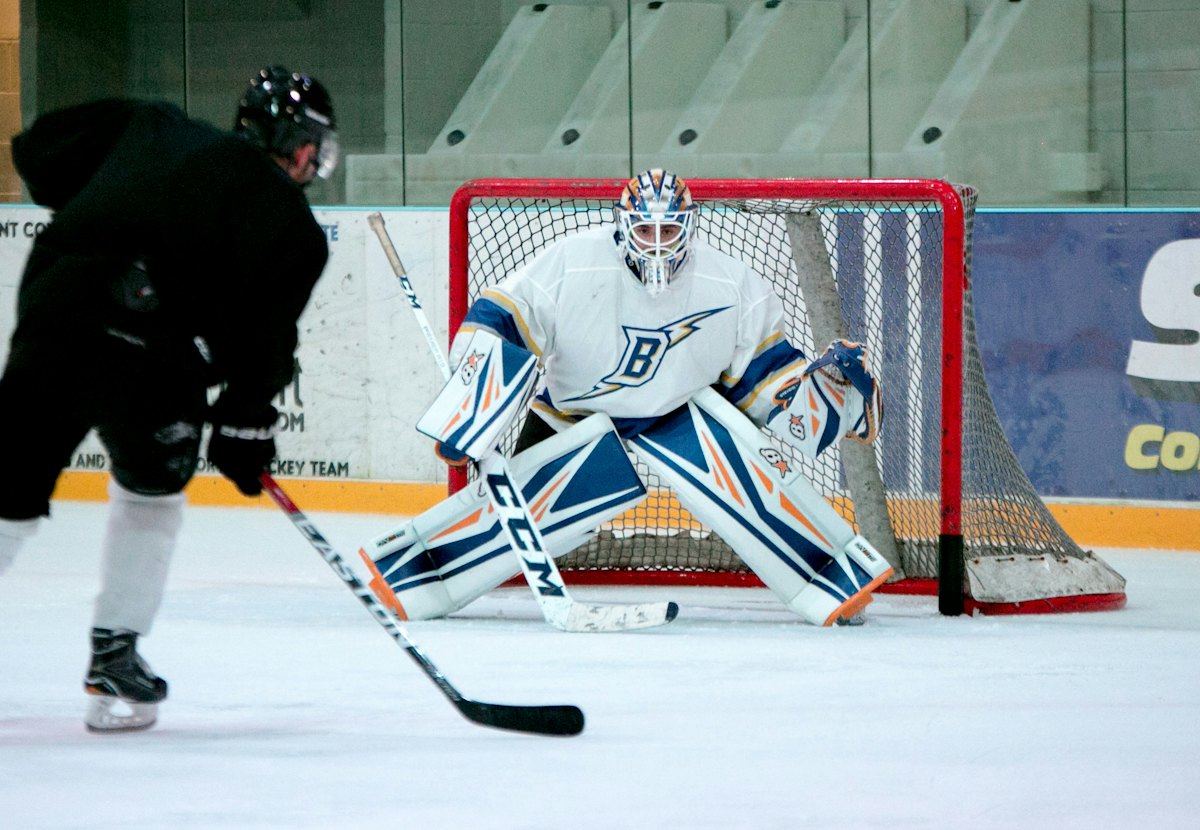
David Ayres went to work on a Saturday night in February 2020 expecting to watch a hockey game. He was 42 years old. He had never played a minute of professional hockey.
By the end of the night he had won an NHL game, and the crowd in the other team's building was cheering for him.
The man in the stands
Ayres worked for the Toronto Marlies, the minor-league team of the Toronto Maple Leafs. He was a building operator at their arena, and part of the job was driving the ice resurfacer, the machine most fans call a Zamboni.
He was also a goalie. For years he had filled in at practices for the Marlies and the Maple Leafs whenever they needed an extra one. That made him a natural choice for an unusual role: emergency backup goalie.
The job is as odd as it sounds. NHL teams dress two goalies for every game. If both get hurt, somebody still has to stand in the net. So every arena kept a local goalie on call, available to either team. On most nights that person watched the game and went home.
Two injuries, one phone call
On February 22, 2020, the Carolina Hurricanes were playing the Maple Leafs in Toronto. Carolina's starting goalie, James Reimer, left with an injury early in the game. His replacement, Petr Mrazek, was knocked out of the game midway through the second period.
Carolina had nobody left. Ayres was called down from his seat. He pulled on a Hurricanes jersey with the number 90 and skated out wearing his own Toronto Marlies mask and pads.
There were 8 minutes and 41 seconds left in the second period. Carolina was ahead 3-1.
A terrible start, then eight saves
The first two shots Ayres faced both went in. For a few minutes it looked like the story would end badly.
Then he settled down, and his new teammates went to work in front of him. They blocked shots, cleared the puck and kept Toronto away from the net. Ayres stopped the next eight shots, and he did not allow a goal in the third period.
Two shots, two goals. Then eight shots, eight saves.
Carolina won 6-3. Ayres was named the first star of the game, and the Toronto crowd gave him a loud ovation.
His night by the numbers
| Stat | Number |
|---|---|
| Age | 42 years, 194 days |
| Entered the game | Second period, 8:41 left |
| Score when he came in | Carolina 3, Toronto 1 |
| Time in net | 28 minutes, 41 seconds |
| Shots faced | 10 |
| Saves | 8 |
| Final score | Carolina 6, Toronto 3 |
He became the first emergency backup goalie ever credited with an NHL win. He also became the oldest goalie to win his regular-season debut, a record that had stood since 1927.
It had almost happened before
Two years earlier, in March 2018, the Chicago Blackhawks ran out of goalies in a game against the Winnipeg Jets. They sent in Scott Foster, a 36-year-old accountant who played in a local recreational league.
Foster played the final 14 minutes and stopped all seven shots he faced. Chicago was already winning when he came in, so the victory went to another goalie. Ayres was the first to come off the bench, play half a game and get the win himself.
What happened next
Ayres had been through harder things. In 2004 he had a kidney transplant, with a kidney donated by his mother, and he was not sure he would ever play hockey again.
Sixteen years later his stick went to the Hockey Hall of Fame. The city of Raleigh, where the Hurricanes play, declared a David Ayres Day. The team sold shirts with his name and number, and part of the money went to a kidney foundation. Ayres kept his jersey and the game puck.
Why it cannot happen the same way again
The NHL and its players agreed to new labor rules that start with the 2026-27 season, and one of them changes this job. Each team now has to bring its own emergency goalie, a full-time team employee who travels to every game, home and away.
There are limits on who qualifies. The emergency goalie cannot have played in the NHL, cannot have played 80 or more professional games, and cannot have played professionally in the last three seasons. So the next one will still be an outsider. But he will already be on the payroll, and he will not be playing against the team he works for.
If you are new to hockey, start with icing, the sport's most confusing rule, then offside, and how the standings work.